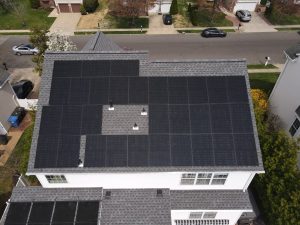
If you’ve noticed water stains on your ceiling and you have a solar panel system installed, your first thought might be:
“Is my solar system causing this roof leak?”
It’s a common concern — especially in New Jersey where heavy rain, nor’easters, wind-driven storms, and freeze-thaw cycles put roofing systems to the test.
The truth?
Solar panel systems themselves do not cause roof leaks.
Improper installation, aging roofing materials, or failed flashing details are usually the real culprits.
Here’s how to tell what’s actually going on.
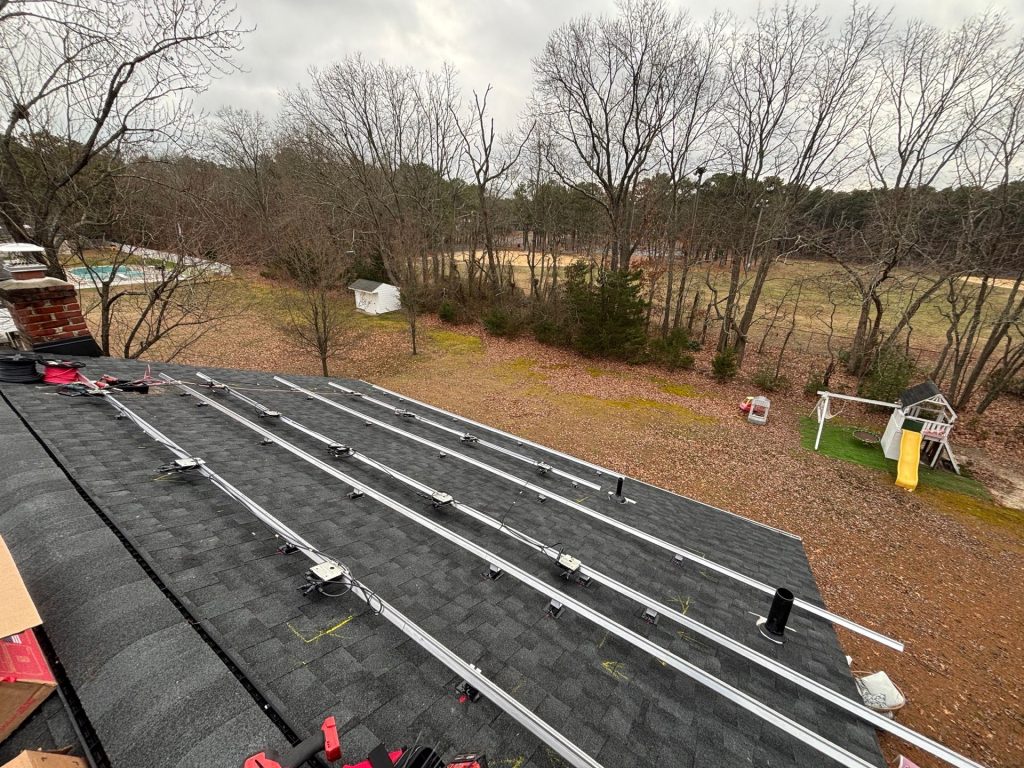


Solar panels are mounted using a racking system secured into your roof rafters. Each penetration should include:
- Code-compliant flashing
- Waterproof underlayment
- Properly sealed lag bolts
- Correct rafter attachment (not just into decking)
When installed correctly, this system is watertight and long-lasting.
Roof leaks happen when:
- Flashing was installed incorrectly
- Sealant dries or cracks over time
- Mounts were fastened into decking instead of rafters
- Panels were installed on an aging roof
- A previous contractor removed and reinstalled panels improperly
7 Signs Your Solar Panel System May Be Contributing to a Leak
1. Water Stains Directly Below the Solar Array
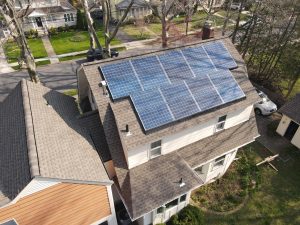
If the leak lines up with the panel footprint, the mounting system may need inspection.
2. Leak Started Shortly After Installation
If your roof was dry for years before solar was installed, timing matters.
3. Dripping During Heavy Wind-Driven Rain
Poor flashing often shows itself during sideways rain events.
4. Wet Insulation or Dark Roof Decking in the Attic
Check your attic after a storm for moisture or staining.
5. Rust Around Exterior Mounting Hardware
Visible corrosion can indicate water intrusion.
6. Cracked or Excessive Sealant Around Mounts
Sealant should never be the primary waterproofing system.
7. Roof Was 15–20 Years Old at Time of Install
Solar should not be installed on a roof near replacement age. Many “solar leaks” are actually roof failures accelerated by penetrations.
Is It the Roof — or the Solar Installation?
This is where contractor experience matters.
Many solar-only companies specialize in panels, inverters, and production — not roofing systems and long-term waterproofing.
We frequently see:
- Solar installed over brittle shingles
- Flashing substituted with heavy caulking
- Mounts placed too close to valleys
- No ice and water shield at penetration points
A leak doesn’t mean your solar equipment is defective.
It often means the waterproofing details weren’t done correctly.
What to Do If You Suspect a Solar-Related Roof Leak
Step 1: Don’t Remove Panels Yourself
Improper removal can void warranties and worsen damage.
Step 2: Schedule a Roofing Inspection
You need someone who understands both roofing and solar mounting systems.
Step 3: Document Interior Damage
Take photos of ceiling stains, attic moisture, and exterior mounts.
Step 4: Review Your Workmanship Warranty
Most reputable installers provide penetration warranties.
Can Solar Be Reinstalled Without Causing Leaks?
Yes — when done properly.
A proper repair may involve:
- Removing and resetting affected panels
- Replacing damaged decking
- Installing new flashing systems
- Upgrading underlayment
- Reinstalling the array correctly
When installed properly, solar panel systems do not increase leak risk. In some cases, the panels actually protect the roof area beneath them from UV exposure and weather wear.
How to Prevent Solar Roof Leaks
Before installing solar:
- Make sure your roof has 10+ years of life remaining
- Use a contractor experienced in both roofing and solar
- Confirm rafter attachment
- Ensure flashing systems are used — not just sealant
- Get a written workmanship warranty
Final Thoughts
If you’re asking, “Is my solar panel system causing a roof leak?” the real question is often:
“Was my roof properly evaluated and sealed during installation?”
Solar systems don’t leak. Improper penetrations do.
If you’re in South Jersey and unsure what’s happening on your roof, a professional inspection can quickly determine whether the issue is flashing failure, installation error, or normal roof aging.
Water always follows the path of least resistance — and even a small waterproofing mistake can eventually show up inside your home.